Herb&Lust
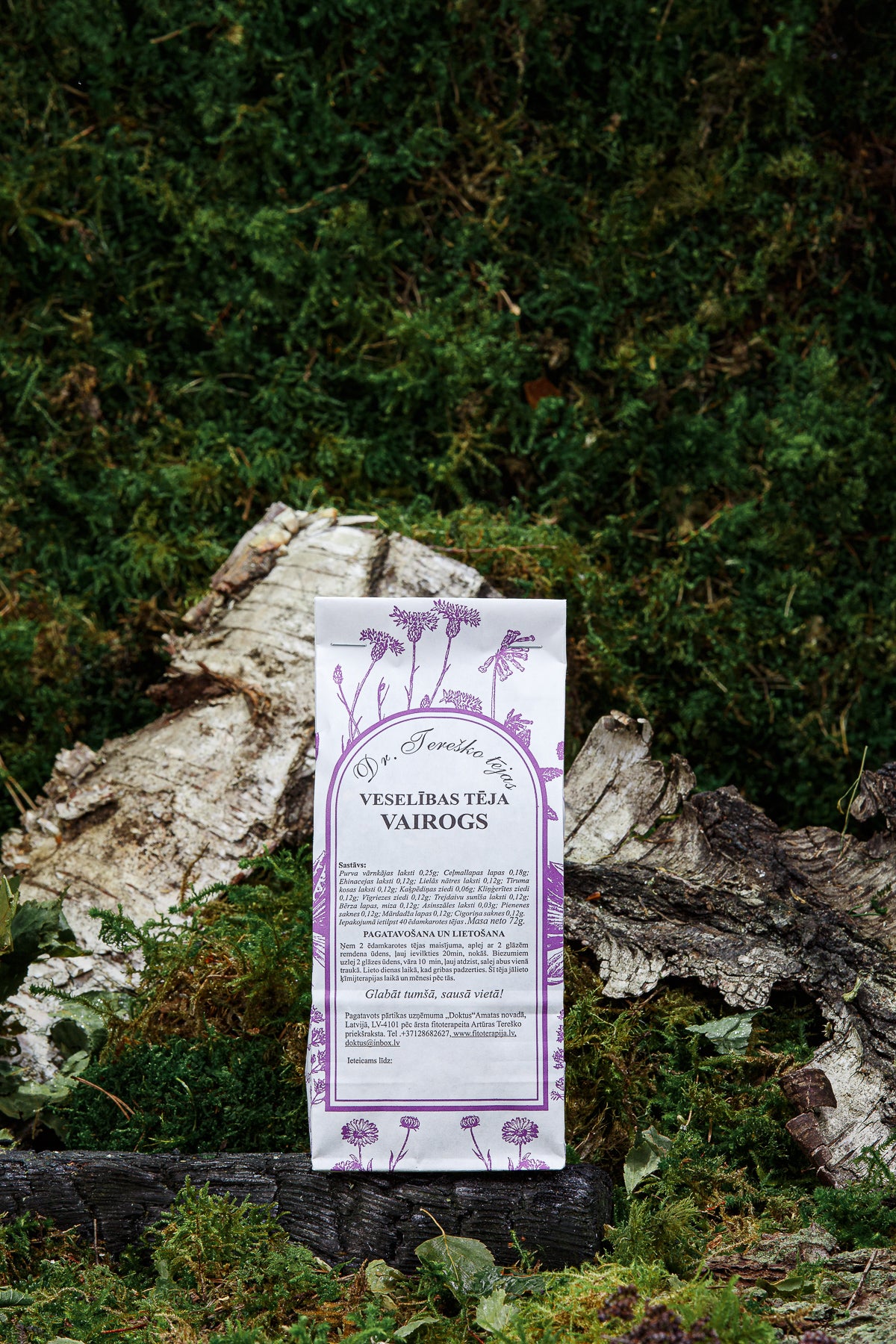
Immunity Tea VAIROGS
Immunity Tea VAIROGS
Couldn't load pickup availability
Contains plants that stimulate the body's immunity for protection against malignant diseases and plants that help overcome health problems caused by chemotherapy.
It often happens in life that people who have already undergone a course of chemotherapy come to a phytotherapist. The condition of these patients is, to put it mildly, critical, because they suffer from the side effects of chemotherapy. To help these people, they themselves need to know what has happened to them, what processes are taking place in the body – if only to follow the doctor's instructions. That's why this harsh story is needed.
Side effects arise for several reasons. The most serious is that when chemotherapy drugs are used, healthy body cells also die along with tumor cells. The cells that divide fastest suffer the most. Tumor cells differ from normal cells in that they divide rapidly and uncontrollably, but the biochemical feeding reactions, the way energy is obtained, and the enzymatic links are the same as for healthy cells. Tumor cells have different sizes and shapes, often with two and three nuclei, but this is not of significant importance, because chemotherapy drugs do not "see" these differences. Chemotherapy drugs destroy rapidly dividing cells by acting on the DNA structure of the cell nucleus, preventing them from dividing or changing the DNA structure in such a way that the new cells formed by the division of tumor cells are not viable.
Not only tumor cells divide rapidly in the body, but also cells in the bone marrow – from which blood cells (leukocytes, erythrocytes, platelets) are formed, mucous membrane cells of the gastrointestinal tract, mucous membrane cells of the kidneys, ureters and other internal organs, germ cells (ova, spermatozoa), cells of the outer layer of the skin and hair follicles, as well as liver and kidney cells. When these cells die, many different disorders occur, as one can imagine when the activity of these organs and systems is destroyed. Knowing everything about chemotherapy, it seems ridiculous that people are afraid of spotted wolfsbane or blue aconite preparations, but readily submit to chemotherapy.
Chemotherapy drugs have a weak effect on cells that are mature and divide slowly. On the one hand, this is good because muscles, bones, and connective tissues do not suffer, but there is also a downside, as tumors composed of highly differentiated cells are insensitive to chemotherapy. This sad situation is made better by the fact that tumor cells are not as well protected against chemical attack as healthy cells, and die faster. Scientists have discovered that the gene in tumor cells that determines the insensitivity of cells to chemicals often has defects. This gene is called the MDR (Multi-Drug Resistance) gene. However, liver and kidney cells suffer significantly because they try to neutralize and excrete these chemicals. It is also difficult to dose chemotherapeutic agents; doctors cannot know what dose will be needed to destroy tumor cells and preserve the viability of at least some of the body's healthy cells. It is also impossible to predict how a given dose will affect the liver and kidneys in a particular patient. However, this therapy is necessary because there is no other option.
It is encouraging that after chemotherapy, the body regenerates, because healthy body cells generally divide only about 30 times, but then, to prevent genetic abnormalities, a cell destruction mechanism is activated. This process is called apoptosis. As a result of chemotherapy, apoptosis occurs immediately, but after some time, when toxic substances have been removed from the body, a stem cell replaces the dead cell, transforming into an organ cell, and life continues. Therefore, it is very difficult for a short time after chemotherapy, but then the condition improves.
When starting chemotherapy, initial side effects such as nausea, vomiting, diarrhea, fever, and chills are observed on the very first day. After 7-10 days, distant side effects begin, associated with the cessation of hematopoiesis, when the level of erythrocytes and leukocytes decreases. Side effects associated with immunodeficiency and toxic organ damage are called late side effects; they occur approximately one month after the completion of the chemotherapy course. Often, the worsening of the condition during this time is associated with the treatment carried out today, even if it is chamomile tea, not to mention homeopathic Conium.
If such a serious illness as a tumor has attacked, all physical and mental strength must be gathered; to overcome it, one must not panic and jump from one healer to another and lose time. One should still follow the traditional path – undergo surgical manipulation, chemotherapy, and radiation therapy, but one must not forget about folk medicine. Herbal teas and homeopathic preparations should be used both before, during, and after chemotherapy. Many dissertations have been defended on the use of medicinal plants during chemotherapy and on phytotherapy against tumors in general, and this measure has been placed on a scientific basis. All scientists and practicing oncologists express their conviction that phytotherapy should be used simultaneously with surgical treatment, chemotherapy, and radiation therapy.
Prophylactically, before a course of chemotherapy, medicinal plants are used to reduce the foreseeable side effects of this therapy; during chemotherapy, medicinal plants are used to reduce the effects of poisoning, detoxify the body, protect healthy cells and tissues, and to make tumor cells sensitive to chemotherapy drugs. There are several groups of plants that are equally useful in the treatment of all types of tumors. It can be said that these plants form the basis of therapy, and plants can be added to it as needed to reduce certain symptoms. There are also some specific plants for the treatment of specific tumors – I will talk about them when discussing specific organ and system diseases.
Useful plants for basic phytotherapy with immunomodulatory, adaptogenic, antioxidant, and oxygen utilization improving (hypoxia-reducing) properties. Knowing and recognizing all of them, a phytotherapy system can be created that will be useful as a basic therapy for combating tumors of any location and any type.
In the first stage, it is necessary to prepare for surgery, chemotherapy, or radiation therapy. At this stage, the main attention should be paid to organizing the immune system and strengthening the body. There may be different nuances in the treatment, but in general terms, the therapy should be as follows:
1. Immediately, as soon as the disease is known, you should start using a 5% tincture of blue monkshood according to the previously described scheme for 5 months.
2. Simultaneously with the blue monkshood tincture, you should use a tea that I have called the "Shield" health tea.
72 g
Ingredients of herbal tea in 2 tablespoons: Marsh cinquefoil herb 0.5g. Plantain leaves 0.36g. Mistletoe leaves 0.24g. Echinacea herb 0.24g. Nettle herb 0.24g. Horsetail herb 0.24g. Meadowsweet flowers 0.24g. Three-lobed beggarticks herb 0.24g. Birch leaves 0.24g. Milk thistle leaves 0.24g. Chicory root 0.24g. Dandelion root 0.14g. Calendula flowers 0.14g. Cat's foot flowers 0.06g.